Stray papers and well-used workbooks, hand drawn maps and piles of literature. The school desks are in need of a serious going over. Even though, I just received our first 2017-18 curriculum order from Teaching Textbooks. That was all I needed to start thinking about posting our full homeschool curriculum plan for this coming school year.
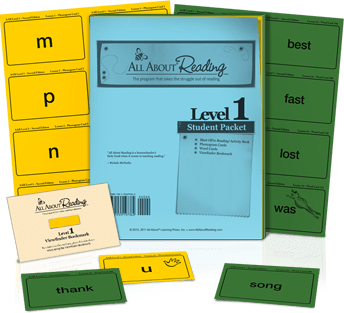
Peter turned 5 in December and showed a number of reading readiness signs so we began with All About Reading Level 1 in January. He's been watching his older siblings "do school" for years and is always asking to "do school". That's how it is with homeschool, the kids' natural curiosity leads to learning and then all of a sudden we're "doing school".
Kindergarten is NOT a big deal in our homeschool. There's no hoopla about the first day of school. Buying glue sticks and markers doesn't mark any special day for us.
Although the learning process is natural and Peter's been doing plenty of Kindergarten work already, he will officially be in Kindergarten this year. Over the years I've found that assigning our children to a grade makes it much easier for them when people ask them about school.
I never assigned grades to our oldest three children when they were in elementary school, but that made for many condescending glares by onlookers. I remember one time in particular; we were at a grocery store mid-morning when the cashier asked, "Aren't you kids supposed to be in school?" I quickly remarked, "We homeschool." Looking at Emily, Nick, and Amber she said, "Oh, what grades are you kids in?" They all gave her a blank stare, shifted back and forth and then looked at me. I stuttered and stammered through an attempt to explain in 30 seconds or less why I felt grading was unnecessary and how a child's natural curiosity will always keep them moving forward on the learning curve. Blah, blah, blah!
I still agree with my old self and I'm rarely one to comply with the norm, but for my children's sake, I make a big deal about what grade they are in so we never have to experience that again.
That was a long intro for a simple run down of the plans I have for Peter this year. First off, Joseph, Peter and Maria often do school together. Or at least I attempt to have them all together. Life gets crazy, kids get crazy and sometimes my perfectly scripted plans go awry.
Reading Road Maps - read all Kinder level books and discuss plot and type of conflict.
What Your Kindergartner Needs to Know - read through all chapters with Peter and supplement with suggested books and music CDs.
Historical DVDs and books will be added according to topics in What Your Kindergartner Needs to Know
Tell Me About the Catholic Faith - we used this two years ago, but then didn't touch it at all this last year. I really like the free printables that Lacey from Catholic Icing has available. We'll pick up where we left off with plans to complete the full book this year.
That will make for a full Kindergarten year. Up next, I'll be detailing Joseph's 3rd grade plans.
Be sure to like Camp Homeschool on Facebook or Follow me at Instagram to stay in the loop with all things homeschool, Down syndrome, cranberries, and of course.....SUMMER!
When I'm researching a new curriculum option I like to see how other families are actually using the product. Do they use it exactly as is? Or do they tweak it to meet their needs?
I tweak everything!!! For one, Joseph does not fit into any box. In some areas his skills are around grade level, yet in other areas he has substantial delays. Homeschooling is the perfect solution to meeting his wide range of needs.
Today I'd like to share A Day With All About Reading.
Joseph (Down syndrome, age 8) is working through Level 1. Progress is slow, but consistent. He's on lesson 16. And we've been at this for well over a school year. I spend a lot of time on the Fluency Practice pages and the word flashcards. Let's say one lesson takes us 6 school days to complete, I still start each day with the green word flashcards. It's become a habit and if I try to start instruction any other way, Joe gets grumpy and wants the fwashcards. I also add in sight word reading lessons between each All About Reading lesson.
Most lessons have activity pages to go with, such as this one. He just learned the /th/ sound and this activity page has him cut out and color (if desired) fried eggs, then place them in a pan and flip them to read. I don't usually have Joe color the pages, but I thought it would be a good lesson in following directions and perseverance to have him use a highlighter to color in each yolk. I gave him explicit directions to color in the entire yolk without getting any yolk on his egg white. While he worked hard at this, I spent time reading books to Peter and Maria.
I put three eggs at a time in the pan, he flipped them and read the /th/ word. The activity pages in All About Reading are simple, fun, and effective practice.
I have a super fun idea to get your kids to practice reading and develop fluency.
Whenever our niece comes to visit, she has a poem to read to us. Her assignment is to read it and have people sign that they listened to her.
Peter is also working through Level 1 - we just started some time in the late fall. He's really good at reading the flashcards, but needs a lot of practice with fluency. Every other lesson of All About Reading has the student read from the phonics reader. One time through the story isn't enough. He's pretty slow and choppy and the meaning of the story is lost. So, I thought about our niece's assignment and adapted it to our homeschool.
I wrote the name of the story on the notecard and then numbered it 1-6. I told him he had to read the story to 6 people and then I would give him a treat. I purchased a giant bag of candy for him to pick from.
It's working like a dream. The first time he reads the story I sign, so then he only has to get 5 other people to listen and sign, but he can't double up. Each person to sign has to = a reading.
Emily's home on spring break - Peter's reading to her while she folds laundry.
Peter reads "The Sad Hog" to Maria.
Peter reads it again to Sam.
Here's a look at his notecard with signatures. I purchased some chocolate, too, so next time Joseph has a phonics reader lesson I'll be using this fluency practice technique with him, too.
All About Reading has been a winner for our family. Do you have questions about this or other levels? Just ask in the comments.
All About Learning Press is always offering new and exciting free games and other learning activities. Here's a fun one for practicing compound words.
Find musical DVDs to help him learn math facts, states, etc. - ✔
Sit with him for endless hours in the bathroom while working on potty training. - ✔
Teach him how to butter his own bread. - ✔
You'd do these for any of your kids right? The difference when dealing with a special needs child is that often times the first thing tried doesn't work. Or the second. Or the third. Usually around the 4th or 5th try is when I finally find something that works. I hope my trial and error process provides you with more insight to help you know where to start.
For any homeschooling parent, especially if you are starting from the beginning, teaching your child to read is the skill that requires the most of your time.
Over the years I've used many different reading programs. I've purchased ready to go curriculum. I've printed and printed and printed phonics worksheets and mini books. I've spent my Dollar Tree budget on workbooks worth exactly what I paid. I've bought my share of early readers. Oh, how I despise most early readers. Some have worked, others not so much. I'll share two of my favorite series later in this post.
Here's what I'm using to teach Joseph (with Down syndrome) to read today. I say today, because I do change things up a bit through the school year depending on what's working and whether I find something new I'd like to try. However, I have no plans on changing because the following two reading tactics are working quite well for us.
This is the phonics component to Joe's reading program. It's really the spine, the meat, the backbone to how I'm teaching Joe to read. Phonics play an important part in reading, even for kiddos with special needs. I've read in numerous places how kids with Down syndrome can only learn to read through sight reading. That's false and short sighted because really, are you going to make flashcards for every word in the dictionary? Because that's what sight reading means - memorizing and learning to recognize words immediately.
Phonics is a tool for readers. A tool to help them sound out a word using very specific rules relating to letter combinations. And I love All About Reading!
It takes you through step by step using a sequence that makes sense. Each step is scripted, which at first (if you haven't used a scripted curriculum) feels fake and slow. But once you pick up on the flow and script style, it's really easy to be natural and still follow the script.
Letter sounds come easy to Joe, but the blending of letters together to read a word is a slow process. He definitely gets the process. It's just his lips don't always want to move into the letter sound shapes quickly. Say the word fun. Look at yourself in the mirror as you say it slowly. Your lips have to make 3 different shapes. Then in order to say the word fast you have to be able to move your lips and tongue quickly. That's where people with Down syndrome often struggle. The brain power is there! The necessary facial control is sometimes difficult.
All About Reading lessons include a section called Fluency Practice. It's usually 1-3 pages of words, phrases, and sentences for your child to read to increase their reading speed. Speed is important for reading comprehension. As we've progressed through the lessons the Fluency pages are our least favorite part because they take a long, loooong, looooooooooooooooooonnnnnnnnnnng time to get through. Like Lesson 10 took over a month.
Looking at a whole page of sentences was overwhelming even if I covered up everything except what he was reading. He just knew it was never ending. So I grabbed a yellow legal pad, turned it sideways and started writing out the sentences word by word for Joe to read, and we haven't turned back. It's working just as I had hoped.
The key to this style of fluency practice is to write one word at a time.
The 2nd key is to adjust the sentences so there's lots of repetition. See my samples below. In the first example the sentences are the same length; I just changed up a word or two in each sentence. Reading the same words over and over again helps with instant recognition.
Lesson 10 Sentences
Lesson 12 Sentences - definitely harder than lesson 10.
Once the full sentence is written I let Joe read it again pointing on his own. Then a smiley face and I start writing the next sentence having him read each word as I write it. Once the page is full, we're done for the day.
----------------------------------Edited 4-13-18------------------------------------
Since this blog post I started a YouTube channel. For a look at All About Reading Level 1 and how I customize it to make it work best for Joseph check out the video.
#2
Like I said earlier, I've bought my fair share of early readers. We've stuffed our library bag, too. I'm hard to please when it comes to those early readers. Some readers have advanced words. We checked out one Level Pre-Primer from the library with the words tornado and lightning. Clearly, those are not pre-primer words. Some are simply stupid.
Thankfully, I ran across Margaret Hillert's "Beginning to Read" books. Most of the books are familiar stories, simplified to only include words off the Dolch word list. The Dolch word list includes 220 of the most often used words in books, textbooks, newspapers, etc. Hillert's books are repetitive throughout and list the words used in the back of the book. Her simplest books use just over 30 different words.
Original copyright hardcovers
New updated versions. These include excellent additional literacy activities. The rhyming activity is really helping Joe with his rhyming.
Books we've read according to number of words
34 - The Three Little Pigs
36 - The Three Goats
43 - The Yellow Boat
44 - Cinderella at the Ball
45 - The Three Bears
49 - A House For Little Red
58 - The Purple Pussycat
61 - Four Good Friends
61 - Dear Dragon Goes to the Library
67 - It's St. Patrick's Day, Dear Dragon
69 - Little Red Riding Hood
72 - Pinocchio
This is just a handful of her books. Amazon has many, many more, but they are pricey. Buying used is probably a good option. Here's another option for purchasing used copies.
Here's how we use the Beginning to Read books.
Day 1. I read aloud the story a couple of times during Morning Time or whenever time permits.
Day 2. I read the title, then have Joe read the title from the title page. I read the first few pages, then have him read a sentence or two. I read a few more pages, then have him read a sentence or two. This continues till the end.
Day 3. I point, he reads. If he gets stuck on a non-phonetic word (true sight word) I simply tell him the word and he keeps reading. If he gets stuck on a phonetic word, I have him sound it out and go on.
Day 4. Repeat of Day 3.
Day 5. I quiz him on the words using homemade flashcards. I write each word on a card, then set out 12 in front of him. I say a word, he finds it and holds it. Each time he finds a word, I replace it with another card so there are always 12 cards in front of him. Once all cards have been picked up he gets a reward, usually a hug, high 5 or animal cracker.
Day 6. Same as Day 5, except I put out 16-20 cards at a time.
Day 7. Joe holds the pile, reads a card, then hands it to me. Once I have all the cards (which I've done nothing to earn them) he congratulates me. He's so funny.
Writing out the flashcards doesn't take much time because the words are used in multiple stories so I just reuse them over and over.
He also reads the book to himself during afternoon quiet time. At this time, I don't correct him if I hear a wrong word. I let him read it any way he chooses as long as he's reading quietly. I want him to simply enjoy books.
Thanks for reading; that was a lot of information. Do you have other questions about teaching reading to beginners? I'd love to help. Please leave a comment here at the blog or at the Camp Homeschool Facebook page.
Most pre-reading programs include rhyming activities. It almost seems that mastering the skill of rhyming is necessary to begin the actual reading program. When I first started the All About Reading Pre-reading program with Joseph last year, I believed he needed to master each lesson before moving on. Quickly, I realized that rhyming was his nemesis. We were never going to move on because unprompted rhyming simply was not going to happen. I have to admit that for a moment I felt despair. He's never going to read. This is it. He's reached the top with his ABC's.
No rhyming = No reading
WRONG.
WRONG.
And more WRONG.
Eventually, I tightened my belt (loosened my belt)...anyway I decided to do the rhyming activities, but not require mastery. We would just keep moving on, despite the fact that bat rhymed with ball and hat rhymed with head. I've talked with other parents of children with Down syndrome and this is a common complaint. Rhyming is not a favorite activity. Joseph is proof that a child with Down syndrome can learn to read even if they can't rhyme.
However, and this is a huge however, rhyming shouldn't be thrown in the trash all together. It's totally ok to learn things outside of the normal order. So, I'll share a little game I play with Joseph to practice rhyming. I call it Nursery Rhyming. Nursery rhymes are a part of our cultural literacy. Cultural literacy is having basic background knowledge of one's culture. Why not incorporate a little cultural literacy and rhyming in one fun game.
Here's what I do. I read a few nursery rhymes aloud a couple of times through. Then I repeat, but I leave out the rhyming word at the end of a stanza. Here's an example:
The Mouse and the Clock
Hickory, dickory, dock!
The mouse ran up the ________;
The clock struck one,
And down he _____,
Hickory, dickory, dock!
The Cat and the Fiddle
Hey, diddle, diddle!
The cat and the _______,
The cow jumped over the moon;
The little dog laughed
To see such sport,
And the dish ran away with the ______.
Joseph fills in the blank with the right word and then I praise him for rhyming. Here's a video clip example.
At the end I always review the rhyming words: dock rhymes with clock, one rhymes with run, diddle rhymes with fiddle, and moon rhymes with spoon. As Joseph improves, I choose more difficult nursery rhymes. Here's a video clip of us reviewing the rhyming words. It's a short clip - certain kids didn't get the message to stay out of the filming area.
For beginners the board book is a good place to start. It has the most popular rhymes for children.
Once all these are memorized, then the full length Mother Goose is best - there are so many rhymes to choose from.
And this adorable board book from Tomie de Paola might just show up in Maria's something to read box on Christmas.
Need more fun ways to teach reading skills?
Here's a link to All About Reading's free activity book.
We're at that point in the summer where homeschool planning and curriculum purchases can't be put off any longer. Maybe you have a 4, 5, or 6 year old and you're wondering if you should invest in a reading program and get down to the business of teaching your child to read. Age is not the only factor, so I've compiled a list of signs to watch for that show reading readiness in young children.
Reading hasn't been easy for all of my children. I've shared our struggle and path before. These reading readiness signs are not only for typical children, but will work for children with dyslexia and Down syndrome as well. I speak from experience. I have 5 readers in the house - all at different levels, including 2 with dyslexia and 1 with Down syndrome. Trust me there are signs to watch for.
As a homeschool mom I've heard my share of stories about 3 year olds reading Harry Potter and 10 year olds taking college classes and I'm sure you have too. Believe me that is not the norm. The norm lies in all our homes. There are early readers, average readers, late readers. Unless there is a significant cognitive disability, children will learn to read when it's approached with love and a good step by step program.
SIGNS OF READING READINESS FOR HOMESCHOOLERS
1. Ability to sing ABC song
From my experience, young children love to sing. Teaching your youngsters to sing the ABC song can be accomplished in so many ways. My favorite is to display an ABC poster, gather around it each morning, and sing slowly while pointing to each letter. An ABC strip in the hallway would work well, too.
The Cedarmont Kids DVDs have been a winner since Emily was small. They have an upbeat version of the ABC song.
Musical stuffed animals make great night time pals. Peter has a plush monkey that sings the ABC song. It's been a favorite since he bought it with his birthday money. This elephant is similar to the monkey we have.
Anything you can do to get your little one singing the ABC song will put them one step closer to reading readiness.
2. "What does this say?"
The desire to read comes from the yearning to know what strings of letters say. Road signs, book covers, love notes - when they start to wonder about these things, they are on their way. Over the years I've found that when kids start to ask, "What does this say?" they are developing a desire to read. They've realized that all those ABC's mean something. They are curious. It's a big step. I have an almost 3 year old already asking this question, however, I also have a child who didn't ask this question until almost 8. They're all different - embrace it, pushing it will only result in excessive tears.
3. "Will you write ________________ on this paper?" and "This says ____________."
Two more question/statements I listen for. When my child starts asking me to write words for them or giving me papers covered with scribbles and "reads" it to me, I know they are approaching reading readiness. They've equated written words with meaning, and they yearn to know the meaning.
4. Obedience
Google defines obedience as: compliance with an order, request, or law or submission to another's authority Compliance is the perfect word to describe the necessary attribute of a child who will be learning to read from their parent. A wise older homeschooling mother once stated at a homeschool support meeting that 'without obedience, homeschooling is impossible'. She's spot on!! If a child refuses to put their shoes in the basket or pickup their stuffed animals or apologize, that issue must be addressed before teaching them to read no matter how ready they are. Because sitting down with a disobedient child for a reading lesson will be hell on earth. Trust me on this one. And no, I will not be sharing any stories no matter how perfectly they illustrate this point. 5. Ability to Rhyme Not necessary, but helpful. So far my kids with dyslexia struggle with rhyming; the kids without dyslexia figured out rhyming early. Joseph, with Down syndrome, but likely not dyslexia, struggle with rhyming. So I add this to the list as another sign to watch for, but please don't hold off on reading lessons if this is the only skill lacking. The five signs showing reading readiness listed above is my personal list. Throughout my 13 years of homeschooling, I've learned to watch for these things. However, it definitely is not the list I learned in college class EDUC 309 (Materials & Methods for Teaching Reading). One of the things on that list that I do not believe is necessary is:
WELL DEVELOPED ATTENTION SPAN
Attention span becomes an issue in the classroom when a group of children are learning together. Each child needs the ability to stay on task and focused even when the teacher is working with another student or teaching something they already know.
In the homeschool setting, cuddled up on the couch with mom, getting all her attention pretty much alleviates any attention span issues. Also, in the homeschool setting if the lesson isn't going as planned it can easily be pushed to a later time or the next day. We can force the lesson, but we don't have to.
If you came here wondering how do I know if my child is ready to read, I hope I've helped you know what to look for. Please don't hesitate to leave questions in the comments. I will address any questions or comments you have.
And if you're saying to yourself, yep, my child's ready, may I suggest my favorite reading program. I've tried many, and All About Reading is the best. (*affiliate link, thank you)
I shared a few pointers in the past about how I began teaching Joe to read. That post has been read by many, many people. That tells me it's an important topic, most likely in the Down syndrome community. I also shared pictures of a reading lesson. During that lesson we were specifically using a Fluency sheet - one of the All About Reading tactics. As I said in that post, I break the lessons down into smaller mini-lessons and we review, review, review. I'm not too concerned about moving through the material quickly; rather my desire is to give Joe a solid footing so, eventually, he can read independently. Short lessons are making that attainable.
Another reading tactic AAR uses is the flip book. Basically, it's a consonant/vowel/consonant booklet where each section can be flipped up to make a variety of real and nonsense words. Joe's lesson for today included reading practice with the flip book and then we moved on to a few flashcards. This was the perfect length lesson for one day (approx. 15 minutes).
Watch this video clip to see how we use the flip book.
A few things to keep in mind while watching:
This is only a snippet of the 9 minute lesson.
Reading is important, but recognizing nonsense words is important, too. I point out nonsense words to Joe.
After working through the flip book, we moved onto word cards. Flashcards don't have to be drudgery. I like to add sentence recitation to our lesson. People with Down syndrome tend to have a harder time speaking clearly. I've found that Joseph likes to abbreviate all his sentences. Rather than saying, "Put water in the pot." He'd rather just say, "water, pot." So to help him form and say entire sentences I provide practice while reading the word cards/flash cards. I have a couple of video clips of us working through word cards.
Things to watch for:
Reading is only half the battle, comprehension is the other half. If at all possible I like to "define" the word for Joe. You'll see us act out a word, use a word in a sentence, and often we sign words as well.
Joseph likes to "get distracted". If I made a big deal of these distracted moments, we'd get nothing done. You'll see me remind him to sit on his hands, look at the words, put his hands in his lap, and stay with me. I try to remain calm and keep things moving. Any break in activity is creating a chance for him to "get distracted".
And lastly, life doesn't stop for filming. You might hear normal large family activity in the background. Sorry.
So there's how we use All About Reading for Homeschooling Joseph. I love the versatility of the program and how easily it can be adapted to the amount of time we have available for a lesson.
Looking to get started? Here's a free activity book from All About Reading. Download now for a peek into the program.
If you are a regular here, you know I use the All About Reading program with Joseph. The teacher's manual is well laid out, making it so easy to jump right in and begin teaching. Being a certified reading teacher isn't necessary at all.
I've also learned throughout my years of homeschooling that any time I can tweak a program to make it uniquely ours, the kids will benefit. The reason being, I know my kids best. I know what parts of the program they'll like and what parts will make them grumpy. I know what will hold their interest. I know when I'll have to perform a dog and pony show to entice them to want to keep trying. (How many infinitives can be in one sentence?)
The one area I've found that needs a little tweaking is the use of Fluency Practice pages. Lesson 6 Fluency Practice includes 93 words plus sentences on the back. There is no way I could or would expect Joseph to sit and read each word in one sitting. Not because he has Down syndrome, but simply because I want to keep reading fun and rewarding for him. Reading is hard work. He gets very tired after 12 minutes of reading. After 15 minutes, he pretty much checks out.
Once we get to the Fluency Practice part of the lesson we slow way down. I have Joseph read a line of words. After each line he gets to put a sticker. This little break relaxes his eyes and busies his fingers, then we begin with the next line. He typically reads 2 or 3 lines a day.
Then I give him a highlighter and I say a word, he finds it and highlights it. He really enjoys this. Sometimes I say an easy word, sometimes one he struggled with. It's great practice skimming for a beginning sound. It's also a chance for him to practice his pencil grip on the highlighter.
We spend about 6-7 school days working on the Fluency Practice page, new and mixed words sections. If you're a little bored with simply reading through the list, try these methods to add some interest to the lesson.
Linking up with
For more of our homeschooling and an All About Reading Level 1 review